
Housing crisis threatens future of Irish as a community language in West Kerry
Posted on: 09 October 2026
The housing crisis is threatening the sustainability of Irish as a community language in the West Kerry Gaeltacht, according to a new policy briefing paper published today by researchers from Trinity College Dublin.
The paper draws on a small-scale qualitative study investigating how residents experience the housing crisis in the West Kerry Gaeltacht. It addresses implications for community and Irish-language sustainability, and the policy and regulatory interventions residents believe are needed to preserve the Gaeltacht for future generations.
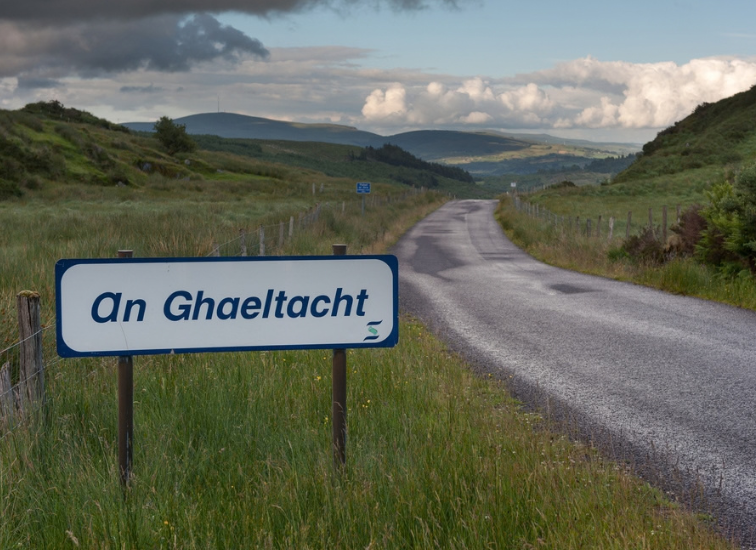
Ó Bhéal an Phobail: Tithíocht i nGaeltacht Chiarraí Thiar (In the Community’s Own Words: Housing in the West Kerry Gaeltacht) provides an evidence-informed response to measures proposed in the draft Sustainable Rural and Gaeltacht Housing, DRAFT National Planning Statement (2026).
The paper was presented at a community event in Baile an Fheirtéaraigh on Friday, October 9th.
“Our research has found a substantial mismatch between local incomes and house prices, which combined with the loss of permanent housing to holiday homes and short-term rentals, is threatening the future sustainability of Irish as a community language in the West Kerry Gaeltacht,” explains lead author of the paper Dr Ann Nolan, who conducted the research at the School of Social Work and Social Policy.
Some participants in the study described the housing situation in West Kerry in terms such as ‘crisis’ and ‘emergency’. Others urged the Government to develop a National Planning Statement that recognises the special needs of the Gaeltacht with protection to the Irish-speaking community in West Kerry, “...or there will be no Gaeltacht here in fifty years”.
Dr Nolan commented: “The number of holiday homes and short-term rentals, which in some areas of the West Kerry Gaeltacht exceeds the number of primary residential properties, emerged as a major concern in all focus groups.
“What came through most strongly from participants was a fear of what will be lost if the housing crisis continues without a co-ordinated, robust and targeted response from government. The community’s fear is not simply about the affordability of housing; it is about the future of Irish as a living community language in the West Kerry Gaeltacht.”
More about this study
This study was conducted for policy impact, and its scope was therefore determined by the timeline supporting the Sustainable Rural and Gaeltacht Housing, DRAFT National Planning Statement (2026).
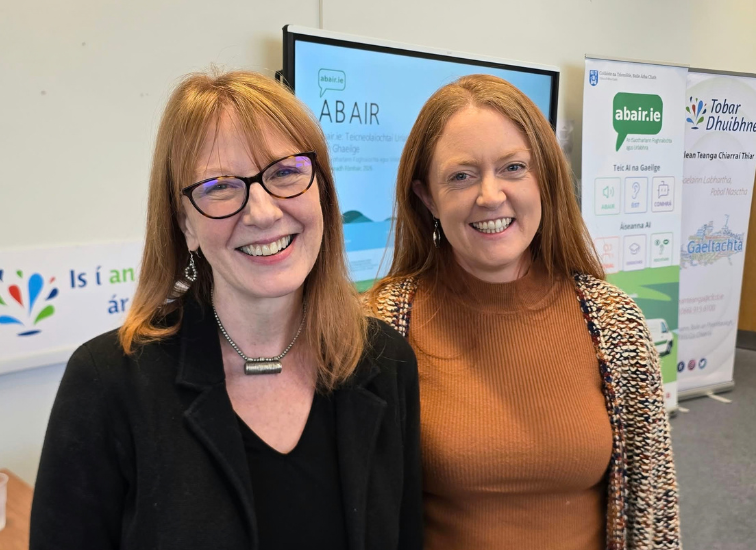
Dr Ann Nolan and Dr Neasa Ní Chiaráin in Baile an Fheirtéaraigh
The briefing paper draws on a mixed methods approach, combining data gathered from six focus-group discussions (44 participants), 2011–2022 census figures, a structured scoping of the academic and policy literature, and relevant international comparator examples. A full analysis of the qualitative dataset will follow in subsequent academic publications.
Technology developed by the ABAIR Research Initiative at Trinity’s School of Linguistic, Speech and Communication Sciences was used in the collection of the primary data for the study.
Dr Neasa Ní Chiaráin, School of Linguistic, Speech, and Communication Sciences, and co-author of the study, explained: “Five of the six focus groups were conducted in Irish. The ABAIR-ÉIST tool was used to produce transcripts which were then corrected by our team, turning hours of natural conversation into rich, accurate data that could be analysed.
“This is the first time that an Irish-language tool has been used in this way for a research study, demonstrating how technology can support and strengthen participatory democracy in Gaeltacht areas.”
“Speech and language technologies for Irish are built on a deep knowledge of the language. We are now using the rich audio data gathered during the Ó Bhéal an Phobail study to improve ABAIR-ÉIST’s recognition of the Corca Dhuibhne dialect."
What are the policy implications of this research
With the publication in June of this year of the Sustainable Rural and Gaeltacht Housing, DRAFT National Planning Statement (2026) by the Department of Housing, Local Government and Heritage, this research provides valuable insights into the lived experience of Irish-language communities in Gaeltacht areas. The Planning Statement will be put out to public consultation.
The paper is also responsive to Gaeltacht and housing-specific provisions announced in Budget 2027. It notes that housing measures do not, as yet, establish how many homes will be delivered through the different affordability mechanisms or whether additional affordable homes will be delivered in Gaeltacht areas.
The authors of the paper call for closer integration of housing and language-planning policy, and propose that the updated Sustainable Rural and Gaeltacht Housing, National Planning Statement presents an opportunity to adopt a more integrated whole-of-government approach to the protection of Irish as a community language for future generations.
They also call on Government to revisit the Short-Term Letting and Tourism Bill, 2026 and to consider how population thresholds for short-term letting regulation operate in small Gaeltacht communities where the population may be low but the proportion of housing diverted to tourism is exceptionally high.
“The State cannot protect Irish as a community language without protecting the communities in which it is spoken. That requires proportionate intervention in the housing market, substantially more affordable and social housing, and stronger regulation where tourism and second-home demand are displacing permanent residents,” Dr Nolan said.
Irish version here.